

1938-39: Joining the Highland League
Highland League Aspirants
On 6 May 1938 the Press and Journal and the Huntly Express both informed their readers that Rothes Victoria FC, described by the P & J as "the crack North of Scotland Junior League combination", were to make a bid for admission to the Highland League in time for the 1938-39 season.
The P & J article continued: "It is learned that a prominent business man in the Speyside town has guaranteed a certain sum and in addition he has undertaken that several of his friends will also act as guarantors. Apart from the question of finance, another difficulty that will confront the club is that of playing accommodation, but it is understood that negotiations are to be set afoot right away for the acquisition of a field on the Seafield Estates.
Enthusiastic Support
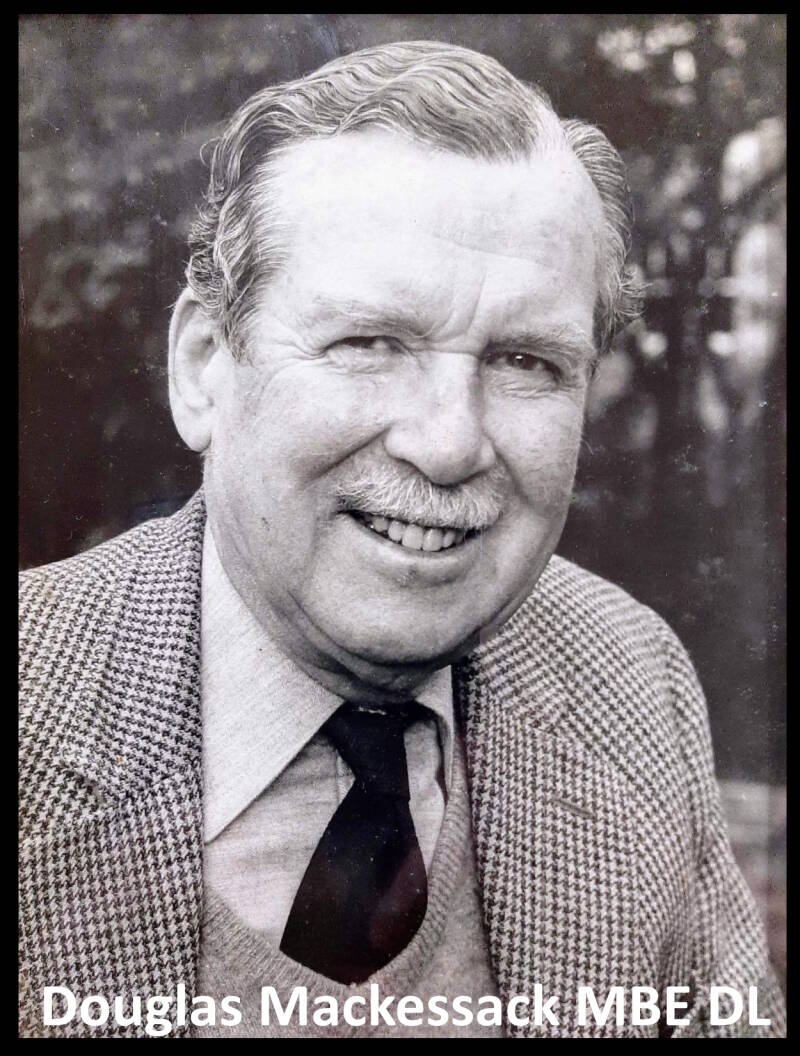
Four days after Rothes Victoria's Highland League ambitions were publicised, a public meeting was held in the Rothes Drill Hall on 10 May, with Captain Douglas Mackessack presiding. A resolution was passed at the meeting approving the action of the committee in making application for entry into the Highland League and also promising full support in preparing the field and raising the necessary funds to defray expenses. The Northern Scot carried a full report of the meeting and quoted Captain Mackessack at some length: "Should Rothes gain admission to the League, they would be capable of holding their own. The secretary of the Club, Mr W. Milne, had been making inquiries, and the team had an excellent chance of getting into the competition, provided they had a ground that conformed with Highland League standards"
"Some of the clubs in the League,” said Captain Mackessack, "feel that there is room for a team in this district. It would not incur very much travelling expenses for any club to come to Rothes. The second point I want to put forward to this meeting is of the support which we are likely to get. Are we justified in going ahead with our application? Are we going to get good support in the way of finance, free labour and also advice in making our ground fit for the League?" In something akin to a rallying cry, the Club President stated: "What we want is support beyond interest."
Securing a new ground
"Our main difficulties are, first of all, to obtain a ground, to prepare that ground, the erection of an enclosure, and, lastly, the raising of money to do it. The record financially of the Club is not too good at the moment,” he continued, "because Rothes has had to play most of their games away from home, and when that happens we do not get any share of the gate.” Rothes would be assured of more home games, and I do not think our expenses would be very much greater.” Mr W. Milne said that at present the Club had a credit balance of about £2O. Captain Mackessack said that if there was a game in Rothes people would travel from Archiestown, Craigellachie and Dufftown, and if there was no game in Elgin they would draw a crowd from there.
“The first really difficult point we have to consider is the choice of ground,” he said. "Our ground at present is leased by the Town Council, and we shall have to put a fence completely round the park. That will mean keeping everyone out. I do not think the Council will allow us to do that, as it would do away with the public park of Rothes. I feel it would be taking away the sporting ground of Rothes and turning it into a private concern. The alternative, however, is a strip of ground at the north end of the pavilion."
Club Secretary Mr. William Milne said he thought the strip of ground at the north end of the pavilion would be most suitable as their ground. It seemed to be fairly central, and was only a stone’s throw from the station and quite near the main road. Consequently, people coming by 'bus or train would have no difficulty in reaching the enclosure. It was agreed that negotiations should be started to secure the ground and that the entrances and the general layout should be left to the committee. Mr. Milne said that at present the pavilion was quite suitable for the home and visiting teams, but there was no accommodation for the referee.
At the ready
In common with a number of local newspapers that week, the Aberdeen Press and Journal on 24 May 1938 provided an update on Rothes FC's required transformation of their ground as part of their application to join the Highland League: Rothes are forging ahead with their preparations for admission to the Highland League next season. Mr Milne, secretary, has received letters from the majority of the teams in the Highland League promising their support to Rothes in their application for admission. Elgin City will propose them, and they will be seconded by Inverness Thistle, but until they know definitely that they will be accepted they cannot make a start with the planning, layout, and levelling of their new ground. All the necessary measuring has been done, however, and they now await the result of the League's meeting on 4 June. Free labour has been offered by almost 100 Rothes enthusiasts, and superintendents have been appointed for the various processes of preparing the playing field. Mr. F. Herrick is in charge of the levelling, and the sowing and ploughing will be supervised by Mr. A. E. Glen Grant, and Mr. A. Innes, New Street. Local carpenters have also offered their services for the erection of the enclosure. The cost of material would be about £200 but the fear that this sum would not be realised had been allayed by the generous action of the club president, Captain Douglas Mackessack, who not only headed a public subscription list with a donation of £5O but guaranteed a bank overdraft of £1OO.
Amateur Status
The P & J added the following with regard to player resources: The team will be run on an amateur basis, and Rothes have been offered the services of Matha Stewart, the ex- Peterhead centre. Lockhead, a former Mugiemoss and Glasgow junior player, will appear in the left half position. All the present Rothes team have signified their willingness to turn-out for Rothes, and there is a general feeling of enthusiasm and optimism in the new venture. Rothes F.C. added another Junior cup to their collection on Saturday by defeating Hill Rovers at Inverness in the final of the Urquhart Cup. The winning team was as follows: Brian, Innes, Clark, Lockhead, Stuart, Meldrum, Forsyth, Taylor, Shewan, Grant, and Taylor. Innes, Forsyth, and Shewan were the scorers for Rothes in a 5-2 victory.
Rothes Admitted
The Highland News and Football Times on 4 June 1938 carried the sports headline news that every football supporter in Rothes had been waiting for - Rothes Admitted. The newspaper confirmed that the application by Rothes F.C. for membership to the Highland League evoked little discussi
on and it was unanimously agreed to. The letter of application stated that the Club were getting a new ground and enclosure which would comply with the regulations of the S.F.A. Travelling expenses would not be abnormal. The President stated that he welcomed‘ the application.
Captain Vince (Elgin City F.C.), moving that the application be granted, said that Rothes F.C. were doing very good work for the game in the centre of Morayshire. They were well supported by Captain Mackessack and other gentlemen. He (Captain Vince) thought the admission of Rothes would be for the good of the game in the North. Mr. Buchan (Fraserburgh) thought that the application should operate for one year only, but this was not seconded. He, however, eventually agreed that the decision of the League for the admission of Rothes should be a unanimous one.
The Dundee Weekly News reported on 11 June 1938 that the North of Scotland Football Association's AGM had unanimously agreed that
"Rothes, the strong-going Morayshire junior club, are unanimously promoted to Highland League status, The report confirmed that Rothes' elevation brought the number of Highland League clubs for the following season up to thirteen.
On 2 July 1938, the Northern Scot reported "a large number of football enthusiasts attended a public meeting in the Drill Hall, Rothes, on Wednesday night in connection with the entry of Rothes Football Club into the Highland League. Captain D. Mackessack, Glengrant, presided. The following office-bearers were appointed: Hon. President, Commander H. Dunbar Rivers; president, Capt. D. Mackessack ; vice- president. Mr James Burgess, North of Scotland Bank ; secretary and treasurer, Mr Wm. Milne, Green Street; committee—Messrs Henry Humble, C. Kerr, J. Smith, J. T.| Armour, G. W. Rhynas, C. Christie, L. Meikle, James Davidson Jnr., W. Roy, G. Grant, Andrew Grant and J. Beaton.
It was announced that the work on the playing field would be completed by the beginning of the following week. Captain Mackessack said Elgin City had granted permission to Rothes to use Borough Briggs when they were away from home in the event of the Rothes ground not being ready at the opening of the season.
At the annual general meeting of the North of Scotland Junior Football Association, held in Inverness on 22 July 1938, Mr R. Fraser, president congratulated Rothes F.C. on their successful season and called upon Mr T. Fraser to present the Farquhar Cup to Mr W. Milne the Rothes representative. Sergeant J. Ballantyne then handed over the Inverness and District trophy which was also won by Rothes.
Mr Milne, speaking on behalf of his club, said they regretted leaving the Association and all the good friends they had made since they joined the Junior body. His club wished the Association and its clubs every success during the coming season. Representatives of the various clubs and the Association representatives reciprocated, and wished Rothes every success in their new sphere.
At a meeting of the North of Scotland Football Association (NSFA} on 28 July 1938, it was resolved that Rothes F.C. be admitted to membership of the association on the motion of Mr. A. Lyon, Clachnacuddin, seconded by Mr. T. Cooper, Inverness Thistle. Rothes’ election was subject to the association making an inspection of the club's ground when it was completed and being found suitable. Two days later, the new Banff/Macduff club, Deveronvale F.C., were admitted to NSFA membership, taking the number of Highland League clubs up to fourteen.
Following a special meeting of the Highland League Committee held in Elgin on the previous Saturday, the Nairnshire Telegraph and General Advertiser reported on 2 August 1938 that representatives from eight clubs unanimously agreed to admit the new Banff-Macduff club Deveronvale F.C. to membership. On 16 August 1938, Rothes and Deveronvale, together with Dunbar Town F.C., were admitted to the S.F.A as associate members. Membership-wise, all the pieces were falling into place.
On Friday 16 September 1938, the Press and Journal listed the Rothes players selected to meet Buckie Thistle at Mackessack Park the following day: Brian; Innes, Clark; Meldrum, Stuart, Cobban; Macpherson, Davidson, Shewan, Grant and Mitchell.
A smoking concert in Rothes' Seafield Arms Hotel, to mark the end of Rothes FC's first season in the Highland League, was summarised in the Banffshire Advertiser on 18 May 1939. Captain Mackessack, Glen Grant, president of the club, presided, and congratulate the members of the team on their displays during their debut season. Bailie H. Humble, Mr. A. W. Wilson, Mr. Valentine and Mr William Milne (secretary of the club) also spoke of the success of the venture. During the evening players were signed for the next season. A supper was served, and an enjoyable evening was spent in song, recitation, and story. Mr J. W. Paul was accompanist.
One new signing had already been announced on 2 January 1939 via a batch of teaching appointments. Mr. Alexander D. Wilson of Elgin, a former captain of Elgin Academy and a prominent Aberdeen University footballer, had been appointed assistant at Rothes H.G. School. Mr Wilson, it was announced at the time, would play for Rothes in the Highland League. Conversely, one player who would not be signing up for Season 1939-40 was James Davidson, the team's popular inside-right, who was rejoining his old unit, the Royal Army Service Corps. Davidson had captained Rothes when they played in the Juniors and attracted attention by his clever play; he would be missed by the Speysiders.